Hidden Beaches in Bali – Secret Paradise Guide
Bali is one of the most beautiful islands in Indonesia, attracting travelers from around the world with its tropical landscapes, rich culture, magnificent temples, and stunning coastlines. While famous beaches such as Kuta, Seminyak, and Nusa Dua attract large numbers of visitors, the island also hides peaceful coastal destinations that offer a completely different experience.
Beyond the popular tourist areas, Bali features secluded coves, dramatic limestone cliffs, quiet stretches of sand, and beautiful turquoise waters. Many of these locations remain relatively unexplored by casual tourists because they require a short hike, a journey through small villages, or a drive away from the main resort areas.
Exploring hidden beaches in Bali allows travelers to experience the island’s natural beauty without the constant activity of crowded tourist attractions. These lesser-known coastal destinations are ideal for photography, relaxation, scenic walks, and discovering Bali’s quieter side.
This detailed secret paradise guide introduces some of Bali’s most remarkable hidden beaches, explains what makes each destination special, and provides practical information for planning an unforgettable coastal adventure.
Why Explore Hidden Beaches in Bali?
Bali’s popularity has transformed many coastal areas into busy tourism centers filled with hotels, restaurants, beach clubs, and entertainment venues. Although these attractions are enjoyable, they do not always provide the peaceful tropical atmosphere that some travelers seek.
Hidden beaches offer an alternative experience where natural landscapes remain the main attraction. Visitors can enjoy the sound of ocean waves, admire towering cliffs, and discover beautiful surroundings away from heavily developed areas.
Another reason to explore these beaches is their diversity. Some feature white sand and clear water, while others are surrounded by rocky formations, sea caves, and dramatic coastal vegetation.
However, a hidden beach does not necessarily mean an empty or completely undeveloped location. Some have become increasingly popular, and access conditions may change as tourism develops.
Travelers who explore responsibly can discover memorable places while supporting nearby communities and helping protect Bali’s natural environment.
See also: Hidden Travel Destinations in Indonesia Beyond Bali
1. Nyang Nyang Beach – A Peaceful Escape Beneath the Cliffs
Nyang Nyang Beach is one of the most impressive secluded beaches on Bali’s southern Bukit Peninsula. Located near Uluwatu, this beautiful stretch of coastline is surrounded by towering limestone cliffs and expansive ocean views.
Unlike the busy beaches around Kuta and Seminyak, Nyang Nyang offers a quieter environment where visitors can appreciate the natural beauty of Bali’s southern coast.
What Makes Nyang Nyang Beach Special?
The beach features a long stretch of pale sand bordered by steep green cliffs. Its open coastline provides spectacular scenery, particularly during the morning and late afternoon.
Because reaching the shoreline involves navigating a steep access route, the beach generally receives fewer casual visitors than more accessible coastal destinations.
The relatively undeveloped surroundings make Nyang Nyang particularly appealing to photographers and travelers seeking a peaceful retreat.
Things to Do at Nyang Nyang Beach
Visitors can enjoy long walks along the coastline, photograph the dramatic cliff scenery, and relax while listening to the ocean waves.
The beach is also an attractive location for watching the changing colors of the sky during sunset.
Swimming requires considerable caution because strong waves and currents can occur, and lifeguard services may not be available.
How to Reach Nyang Nyang Beach
Nyang Nyang is accessible from the Pecatu and Uluwatu areas. Depending on the chosen entrance and current road conditions, visitors may need to walk down a steep path or staircase.
Comfortable footwear, drinking water, and adequate sun protection are important. Visitors should also allow sufficient daylight for the return journey.
2. Green Bowl Beach – A Hidden Cove With Natural Caves
Green Bowl Beach is a beautiful coastal destination located near Ungasan in southern Bali. Surrounded by limestone cliffs and tropical vegetation, this small beach offers a combination of natural caves, sandy shores, and impressive ocean scenery.
Its relatively challenging access has helped preserve a quieter atmosphere compared with many well-known beaches.
Discover the Beauty of Green Bowl Beach
The beach is especially attractive during suitable low-tide conditions, when more of the sandy shoreline becomes visible.
Natural caves along the cliffs add a distinctive character to the landscape. These formations create interesting photography opportunities and provide a sense of adventure.
Visitors should be careful around caves, rocks, and changing tides, as water levels and wave conditions can change.
Activities at Green Bowl Beach
Green Bowl is ideal for coastal photography, quiet relaxation, and enjoying the surrounding natural scenery.
Experienced surfers may find suitable waves under certain conditions, although the reef environment requires appropriate skills and awareness.
Swimming should only be considered when conditions are clearly safe, as the beach can experience powerful waves and has limited safety facilities.
Travel Tips for Green Bowl Beach
Access typically involves descending a long staircase from the clifftop.
The return climb can be tiring, especially during hot weather. Travelers should carry sufficient water, wear supportive footwear, and avoid visiting when storms or dangerous surf conditions are expected.
3. Gunung Payung Beach – A Beautiful Coastal Retreat
Gunung Payung Beach is located on the southeastern side of Bali’s Bukit Peninsula, not far from the better-known Pandawa Beach.
This peaceful destination features clear coastal waters, soft sand, and impressive limestone cliffs that create a picturesque tropical setting.
Although tourism facilities have developed around the area, Gunung Payung can still feel more relaxed than Bali’s busiest beaches.
Natural Attractions at Gunung Payung Beach
The coastline is characterized by beautiful ocean views and a dramatic backdrop of cliffs.
During favorable conditions, the water displays beautiful shades of turquoise and blue, making the beach an attractive location for photography.
The surrounding landscape also provides opportunities to appreciate Bali’s distinctive southern coastal geography.
Things to Experience at Gunung Payung Beach
Visitors can spend time relaxing on the sand, enjoying scenic walks, and taking photographs of the shoreline.
The area is also suitable for travelers who want to experience a quieter beach atmosphere without traveling far from southern Bali’s established tourism areas.
Water activities depend on tides, wave conditions, and local safety guidance.
Visiting Gunung Payung Beach
The beach can be reached by road from areas such as Nusa Dua, Ungasan, and Uluwatu.
Access to the sand may involve stairs or designated transport services, depending on current arrangements.
Visitors should check local facilities and entry requirements before arriving.
4. Bias Tugel Beach – A Small Paradise in East Bali
Bias Tugel Beach is a beautiful coastal destination located near Padangbai in eastern Bali.
This relatively small beach is surrounded by rocky hills and tropical vegetation, giving it a sheltered appearance that appeals to travelers seeking a quieter environment.
It is particularly attractive for visitors exploring the eastern part of the island.
Why Bias Tugel Beach Is Worth Visiting
One of the beach’s most appealing features is its combination of pale sand, blue water, and natural coastal scenery.
Compared with heavily commercialized tourist beaches, Bias Tugel often feels more intimate and relaxed.
Small local food stalls may be available, allowing visitors to enjoy refreshments while spending time near the shore.
Activities at Bias Tugel Beach
Visitors can relax on the sand, take coastal photographs, and admire the surrounding hills.
Snorkeling may be possible when water conditions are suitable, but visitors should avoid entering the sea when waves or currents are strong.
The beach is also an enjoyable stop during a wider exploration of Padangbai and the eastern coastline.
How to Reach Bias Tugel Beach
Travelers generally reach Padangbai by road before continuing toward the beach access point.
A short walk over uneven ground may be required, making comfortable shoes a practical choice.
5. Thomas Beach – A Relaxing Alternative Near Uluwatu
Thomas Beach is a beautiful stretch of coastline situated in the Uluwatu area of southern Bali.
Although it is becoming increasingly recognized among travelers, it often provides a more relaxed atmosphere than some of the area’s famous beaches.
The beach combines soft sand, rocky coastal features, and beautiful ocean views.
What Makes Thomas Beach Attractive?
Thomas Beach is known for its scenic shoreline and relatively peaceful surroundings.
The beach provides an appealing setting for people who want to spend a few hours enjoying the ocean without the constant activity of large resort developments.
Its location also makes it convenient for travelers exploring other attractions around Uluwatu.
Things to Do at Thomas Beach
Visitors can enjoy sunbathing, photography, reading, and leisurely walks along the sand.
Local establishments may offer drinks, food, and basic beach facilities.
Swimming conditions vary with tides and surf, so travelers should observe the water carefully and follow local recommendations.
Best Time to Visit Thomas Beach
Early mornings are often pleasant for travelers who want a quieter experience.
Late afternoons can also provide beautiful lighting for photography.
Because the beach is accessed through steps and paths, visitors should wear comfortable footwear and avoid rushing the return climb.
6. Tegal Wangi Beach – A Scenic Sunset Destination
Tegal Wangi Beach is located near Jimbaran on Bali’s southwestern coast. This beautiful coastal area is recognized for its dramatic cliffs, rocky shoreline, and spectacular sunset views.
The beach has gained attention among photographers because of its natural scenery and impressive views over the Indian Ocean.
Discover Tegal Wangi’s Coastal Beauty
The landscape combines limestone cliffs, exposed rock formations, and ocean waves.
During suitable low-tide conditions, shallow pools may appear among the coastal rocks, creating interesting reflections.
However, these pools should not automatically be considered safe swimming areas. Sudden waves, slippery rocks, and changing tides can create dangerous conditions.
Photography and Sunset Experiences
Tegal Wangi is particularly attractive during the late afternoon when the sunlight creates warm colors across the cliffs and ocean.
Travelers can capture beautiful coastal photographs from appropriate viewpoints.
Cliff edges can be unstable or unprotected, so maintaining a safe distance is essential.
Important Visiting Advice
Access arrangements and restrictions can change.
Visitors should confirm whether the beach and nearby paths are open before traveling. Anyone visiting near sunset should also plan a safe return before darkness.
7. Balangan Beach – Golden Sand and Dramatic Ocean Views
Balangan Beach is located on the Bukit Peninsula and is known for its broad sandy shoreline, impressive cliffs, and surfing conditions.
Although Balangan is not completely hidden, it can provide a quieter alternative to Bali’s major urban beaches, particularly outside busy periods.
Natural Beauty of Balangan Beach
The beach offers sweeping ocean views and a beautiful coastal landscape.
Its elevated viewpoints are popular for photography because they provide panoramic views of the shoreline.
The combination of golden sand, limestone cliffs, and tropical vegetation makes Balangan one of southern Bali’s memorable coastal destinations.
Popular Activities at Balangan Beach
Surfing is a major attraction, particularly for experienced surfers familiar with reef breaks.
Visitors who do not surf can enjoy relaxing on the beach, watching the waves, or exploring scenic viewpoints.
Small cafés and local establishments are available in parts of the area.
Travel Considerations
The beach is accessible by road from the Jimbaran and Uluwatu regions.
Swimming conditions can be challenging because of waves, reefs, and currents. Visitors should select suitable areas only when local conditions permit.
8. Amed’s Quiet Beaches – Volcanic Beauty and Marine Life
Amed is a coastal region in eastern Bali known for its traditional fishing villages, volcanic landscapes, and underwater attractions.
Unlike Bali’s southern white-sand beaches, many coastal areas around Amed feature dark volcanic sand or pebbles.
This distinctive scenery makes Amed an excellent destination for travelers seeking a different coastal experience.
Explore Amed’s Unique Coastal Landscape
The combination of dark beaches, traditional fishing boats, and views toward Mount Agung creates a memorable atmosphere.
The region has a more relaxed pace than many major resort destinations.
Early mornings can be particularly beautiful when fishing boats return to shore and sunlight illuminates the surrounding hills.
Snorkeling and Diving Opportunities
Amed is known for snorkeling and diving locations where visitors may observe coral formations and tropical marine life.
Underwater visibility and conditions vary depending on weather, currents, and sea activity.
Travelers should choose suitable entry points, avoid touching coral reefs, and use experienced local guides when necessary.
Experience Local Fishing Communities
Beyond marine recreation, Amed offers opportunities to learn about traditional coastal livelihoods.
Visitors can explore small villages, enjoy local cuisine, and experience the cultural character of eastern Bali.
For travelers who appreciate quiet coastal communities, Amed provides a rewarding alternative to busier beach destinations.
9. Suluban Beach – A Dramatic Beach Beneath the Rocks
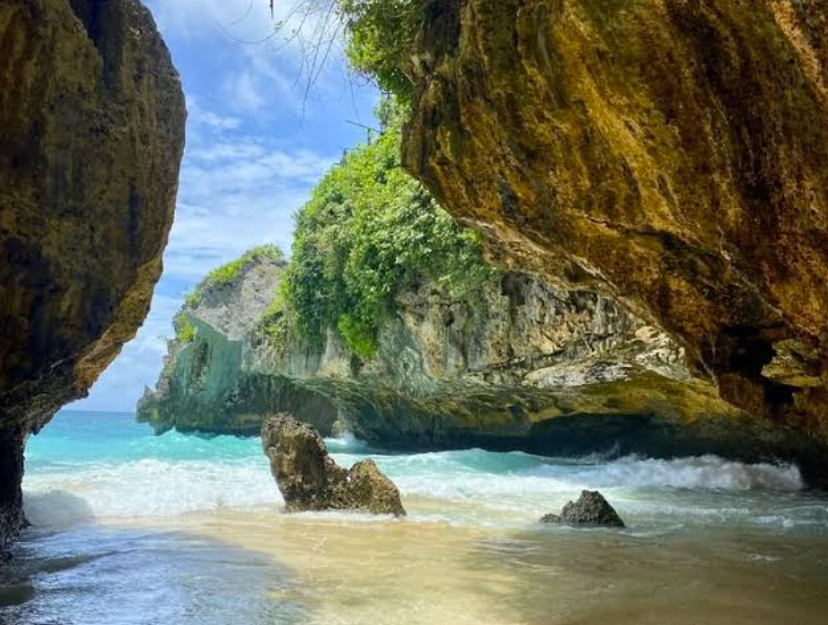
Suluban Beach, also known as Blue Point Beach, is located near Uluwatu and is famous for its remarkable rock formations and narrow coastal passages.
Unlike wide sandy beaches, Suluban features an unusual landscape where visitors pass between limestone formations to reach the shoreline.
What Makes Suluban Beach Unique?
The beach is surrounded by towering rocks and natural openings that create a dramatic coastal environment.
At lower tides, visitors may find more accessible sandy areas and interesting rock formations.
At higher tides, portions of the beach can become submerged or difficult to navigate.
Activities at Suluban Beach
The beach is popular for photography, exploring accessible rock formations, and watching experienced surfers.
The surrounding Uluwatu area offers elevated viewpoints and places to enjoy ocean scenery.
Suluban is not an ideal choice for casual swimming because of strong surf, rocky conditions, and changing tides.
Safety Tips for Visiting Suluban
Travelers should check tide conditions and avoid entering narrow passages when rising water or strong waves may create hazards.
Sturdy footwear is helpful on uneven surfaces.
Visitors should also follow any local restrictions or guidance concerning access to the caves and shoreline.
10. Melasti Beach – A Scenic Coastal Destination With Towering Cliffs
Melasti Beach is located in Ungasan on Bali’s southern coast and is surrounded by impressive limestone cliffs.
The winding road leading toward the shoreline provides beautiful views of the ocean and surrounding rock formations.
Although Melasti has become a popular tourist destination rather than a truly secret beach, its natural landscape makes it a worthwhile addition to a coastal exploration of southern Bali.
Why Visit Melasti Beach?
The combination of steep cliffs, turquoise coastal water, and pale sand creates a spectacular setting.
The dramatic entrance road is among the area’s distinctive features.
Melasti also offers more developed visitor facilities than many of Bali’s remote beaches.
Activities and Attractions
Visitors can enjoy coastal photography, relaxing on the sand, and exploring designated beach areas.
Restaurants and other tourism facilities are available nearby.
The beach is particularly appealing to travelers who want beautiful scenery without the demanding hikes associated with certain secluded coves.
Visiting Melasti Beach
Melasti is accessible by road, making it practical for travelers staying in Nusa Dua, Jimbaran, or Uluwatu.
Because it is a recognized tourism destination, visiting earlier in the day may provide a more peaceful experience.
Best Time to Visit Hidden Beaches in Bali
Bali generally experiences two main seasonal patterns: a relatively dry season and a wetter season.
The dry season commonly extends from approximately April to October, while the wetter months usually occur between November and March. Weather conditions can vary from year to year.
Visiting During the Dry Season
The drier months are often attractive for beach exploration, photography, and outdoor activities.
Road conditions and walking trails may be more manageable when rainfall is limited.
However, some beaches can still experience strong surf and dangerous currents during otherwise pleasant weather.
Visiting During the Rainy Season
The rainy season can bring lush green landscapes and a different atmosphere to Bali.
Travelers may encounter heavy showers, slippery paths, and occasional disruption to outdoor activities.
Checking local weather conditions is especially important before visiting remote beaches that require steep descents.
Understanding Tides and Ocean Conditions
Tides play an important role in the accessibility of several hidden beaches.
Some coves become narrower during high tide, while rocky areas and tide pools may be more visible during low tide.
However, low tide does not automatically make a beach safe for swimming. Wave height, currents, reef conditions, and local warnings should always be considered.
How to Find Hidden Beaches in Bali
Discovering secluded coastal locations often requires additional preparation compared with visiting major tourist beaches.
Research Beach Access Before Traveling
Some beaches are accessed through steep staircases, narrow roads, or walking trails.
Access routes may change due to erosion, private development, construction, or local restrictions.
Travelers should verify current access information before beginning their journey.
Use Reliable Transportation
Private drivers, organized tours, and suitable local transportation can help visitors reach beaches outside established tourism areas.
Travelers planning to use motorcycles should have the appropriate license, experience, and protective equipment.
Steep or uneven coastal roads can be challenging, particularly after rainfall.
Start Your Journey Early
Early departures can help visitors avoid heavy traffic and the strongest afternoon heat.
Morning visits may also provide quieter conditions at beaches that become busier later in the day.
Carry Essential Supplies
Remote beaches may have few shops or facilities, so visitors should bring drinking water, sun protection, appropriate footwear, and necessary personal items.
It is also helpful to carry some cash because digital payment facilities may not be available everywhere.
Essential Safety Tips for Exploring Bali’s Secret Beaches
Although hidden beaches are beautiful, their isolated locations and natural conditions can create additional safety challenges.
Be Careful Around Strong Waves
Bali’s southern coastline faces the Indian Ocean, where powerful waves and currents are common.
Never assume that clear or shallow-looking water is safe.
Visitors should avoid swimming in unfamiliar conditions, especially when lifeguards are absent.
Stay Away From Dangerous Cliff Edges
Clifftop viewpoints offer spectacular scenery, but some areas lack protective barriers.
Loose rocks, erosion, and slippery surfaces can make coastal cliffs hazardous.
Always remain on designated paths and maintain a safe distance from unstable edges.
Avoid Exploring Remote Beaches After Dark
Many secluded beaches have limited lighting and difficult access routes.
Returning before sunset is generally safer, particularly when the route involves steep stairs or rocky trails.
Respect Wildlife and Marine Habitats
Visitors should avoid disturbing marine animals, collecting coral, or walking on sensitive reef formations.
Responsible behavior helps protect Bali’s coastal ecosystems.
Responsible Tourism at Bali’s Hidden Beaches
As more travelers discover lesser-known beaches, responsible tourism becomes increasingly important.
Popularizing secluded locations can support nearby communities, but uncontrolled tourism may also contribute to pollution and environmental damage.
Keep Beaches Clean
Visitors should collect their waste and dispose of it properly.
Single-use plastic products can harm marine life and reduce the natural beauty of coastal environments.
Support Local Businesses
Purchasing refreshments from local vendors, hiring local guides, and using community-managed services can help tourism benefit nearby residents.
Respect Local Traditions
Bali has a rich cultural identity, and some coastal locations are associated with religious ceremonies or traditional activities.
Travelers should respect local customs, observe signs, and avoid interfering with ceremonies.
Preserve the Natural Environment
Natural caves, coral reefs, coastal vegetation, and rock formations contribute to the unique character of Bali’s beaches.
Avoid damaging these environments or removing natural materials as souvenirs.
Frequently Asked Questions About Hidden Beaches in Bali
What Are the Best Hidden Beaches in Bali?
Some of the most attractive lesser-known beaches include Nyang Nyang Beach, Green Bowl Beach, Gunung Payung Beach, Bias Tugel Beach, Thomas Beach, and Tegal Wangi Beach. Each offers different scenery, access conditions, and opportunities for coastal exploration.
Are Hidden Beaches in Bali Free to Visit?
Some beaches are free to access, while others may charge entrance, parking, or transportation fees. Prices and access arrangements can change, so visitors should check locally before traveling.
Which Hidden Beach in Bali Is Best for Photography?
Nyang Nyang is excellent for wide coastal landscapes, Green Bowl offers dramatic caves and cliffs, and Tegal Wangi is known for its sunset scenery. Gunung Payung and Bias Tugel are also attractive photography locations.
Can You Swim at Bali’s Hidden Beaches?
Swimming is possible at some beaches when conditions are suitable, but many hidden locations have strong waves, reefs, changing currents, and limited lifeguard coverage. Visitors should follow local safety advice and avoid entering unfamiliar or hazardous waters.
Which Hidden Beaches Are Near Uluwatu?
Nyang Nyang, Green Bowl, Thomas Beach, Suluban Beach, and Balangan Beach are located in or around the broader Uluwatu and Bukit Peninsula area. These destinations can be explored individually or combined into a carefully planned coastal itinerary.
What Should Travelers Bring When Visiting Hidden Beaches in Bali?
Travelers should bring water, sunscreen, comfortable footwear, a hat, personal medication, and a fully charged phone. Cash, snacks, and a waterproof bag may also be useful, particularly at remote beaches with limited facilities.
Conclusion
Bali’s coastline offers much more than its world-famous tourist beaches. Away from the busiest resort areas, travelers can discover peaceful coves, dramatic cliffs, traditional fishing communities, and remarkable natural landscapes.
From the expansive shoreline of Nyang Nyang Beach and the fascinating caves of Green Bowl to the relaxing atmosphere of Gunung Payung and the beautiful scenery of Bias Tugel, every destination offers a different perspective on the island’s coastal beauty.
Exploring hidden beaches in Bali is an opportunity to escape crowded tourism centers, connect with nature, and experience memorable moments in quieter surroundings.
Whether you are planning a romantic escape, a photography adventure, or a relaxing tropical holiday, these lesser-known locations can add something special to your journey.
With thoughtful planning, respect for local communities, and awareness of coastal safety, travelers can enjoy these beautiful destinations responsibly.
For more travel inspiration and guides to Indonesia’s remarkable landscapes, discoverindonesianow helps travelers explore beautiful destinations, uncover lesser-known attractions, and appreciate the natural and cultural wonders that make Indonesia an unforgettable place to visit.