
Indonesian Cultural Traditions Every Visitor Should Experience
Indonesia is a country where ancient customs, colorful festivals, traditional performances, and spiritual ceremonies remain an important part of everyday life. With thousands of islands and hundreds of ethnic communities, the country offers an extraordinary variety of cultural experiences that attract travelers from around the world.
From the graceful dances of Bali to the traditional batik workshops of Java, Indonesian cultural traditions reflect generations of history, creativity, and community values. Each region has its own customs, celebrations, languages, and artistic expressions, making Indonesia one of Southeast Asia’s most culturally diverse destinations.
For travelers who want to explore beyond beaches and famous tourist attractions, understanding local traditions can transform an ordinary vacation into a meaningful cultural journey. This guide introduces the Indonesian cultural traditions every visitor should experience, along with their historical significance, regional differences, and practical tips for respectful participation.
Understanding Indonesia’s Rich Cultural Heritage
Indonesian culture has developed through centuries of interaction between indigenous communities, regional kingdoms, religious traditions, and international trading networks. Influences from Hinduism, Buddhism, Islam, Christianity, and local belief systems have contributed to the country’s diverse cultural identity.
One of Indonesia’s most important national principles is Bhinneka Tunggal Ika, meaning “Unity in Diversity.” This philosophy recognizes the country’s many cultures while emphasizing a shared national identity.
See also: Hidden Travel Destinations in Indonesia Beyond Bali
Why Indonesian Traditions Are Important
Traditional customs are more than occasional celebrations. They help communities maintain connections with their ancestors, preserve historical knowledge, and pass cultural values to younger generations.
Many Indonesian traditions focus on important principles such as:
- Respect for family members and community elders.
- Maintaining harmony between people, nature, and spiritual beliefs.
- Preserving traditional arts and craftsmanship.
- Celebrating important religious and seasonal events.
- Strengthening social relationships through collective activities.
Visitors who understand these values can appreciate the deeper meaning behind Indonesia’s ceremonies, festivals, and everyday customs.
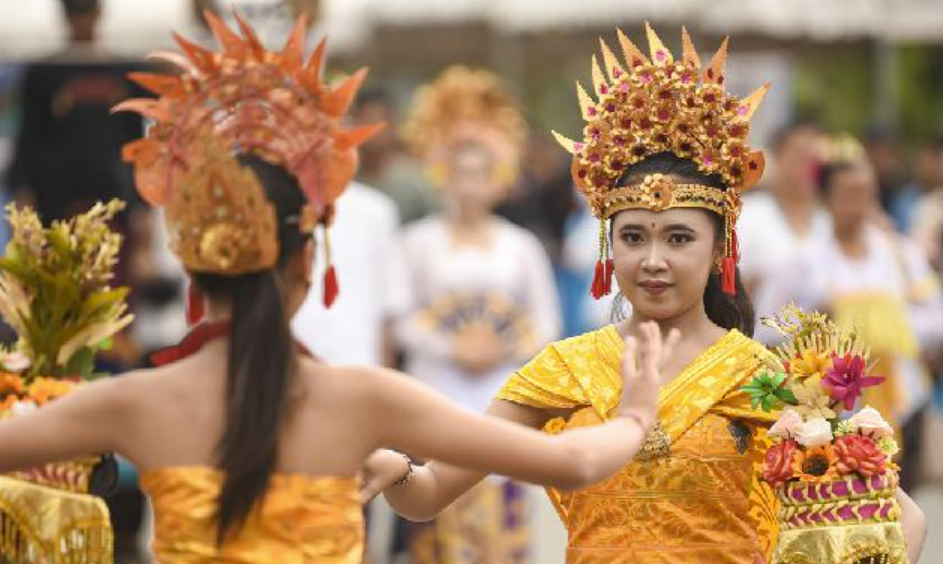
1. Experience Traditional Balinese Dance Performances
Traditional Balinese dance is among Indonesia’s most recognizable cultural expressions. These performances combine detailed costumes, expressive movements, dramatic storytelling, and traditional musical accompaniment.
Dance plays an important role in Balinese Hindu culture, appearing in religious ceremonies, community festivals, and public performances.
Kecak Dance: A Unique Musical Performance
The Kecak dance is famous for its rhythmic chanting performed by a large group of participants. Unlike many other traditional dances, Kecak typically relies on coordinated human voices rather than a conventional instrumental orchestra.
The performance often tells episodes from the Hindu epic Ramayana, particularly the story of Rama, Sita, and Hanuman.
Visitors can watch Kecak performances in several locations across Bali, including cultural venues around Ubud and the famous Uluwatu Temple area.
Legong Dance: Graceful Movements and Artistic Expression
Legong is known for its delicate hand gestures, precise footwork, expressive eyes, and elaborate costumes.
Historically associated with Balinese royal culture, this dance requires years of practice to master its intricate movements.
Travelers interested in traditional performing arts can attend cultural performances where Legong is presented alongside other Balinese dance styles.
Barong Dance: The Symbol of Protection
The Barong dance presents a dramatic representation of the struggle between protective and destructive forces.
Barong is commonly represented as a protective spirit, while Rangda is associated with frightening supernatural power.
The performance combines music, storytelling, and symbolic characters, offering visitors insight into Balinese spiritual traditions.
2. Discover the Traditional Art of Indonesian Batik
Batik is one of Indonesia’s most celebrated artistic traditions and an important symbol of national cultural identity.
This textile-making technique involves applying wax to selected areas of fabric before dyeing it. The wax prevents dye from reaching certain sections, allowing artisans to create detailed patterns and complex designs.
Indonesian batik was recognized by UNESCO as Intangible Cultural Heritage of Humanity in 2009.
Different Types of Traditional Batik
Batik designs vary depending on their regional origins and cultural influences.
Javanese Batik: Often features traditional geometric patterns, symbolic motifs, and carefully balanced colors.
Pekalongan Batik: Known for colorful designs influenced by the city’s long history of international trade.
Yogyakarta Batik: Frequently uses classical patterns connected with Javanese royal traditions.
Solo Batik: Recognized for elegant motifs and colors associated with Central Javanese cultural heritage.
Participate in a Batik-Making Workshop
Visitors can join workshops in Yogyakarta, Solo, and other Indonesian cities to learn how traditional batik is produced.
During a typical workshop, participants may learn how to:
- Draw traditional patterns on fabric.
- Apply melted wax using a specialized tool called a canting.
- Understand the basic fabric-dyeing process.
- Explore the cultural meaning behind common batik motifs.
- Create a small handmade textile to take home.
Participating in a workshop is an excellent way to support local craftspeople while gaining practical knowledge of Indonesian cultural traditions.
3. Attend Traditional Indonesian Festivals
Festivals provide some of the most memorable opportunities to experience Indonesia’s cultural diversity.
Throughout the year, communities organize religious celebrations, cultural gatherings, harvest festivals, and traditional performances.
Each event reflects local beliefs and historical traditions.
Galungan and Kuningan in Bali
Galungan is an important Balinese Hindu celebration associated with the victory of dharma, or righteousness, over adharma, or unrighteousness.
During Galungan, families prepare offerings, visit temples, and decorate streets with tall bamboo poles called penjor.
Kuningan takes place ten days after Galungan and marks the closing period of the celebration.
Visitors traveling during these festivals may notice beautifully decorated villages and families wearing traditional ceremonial clothing.
Because these are religious occasions, travelers should observe ceremonies respectfully and follow local guidance.
Sekaten Festival in Yogyakarta
Sekaten is a traditional Javanese celebration associated with the commemoration of the birth of the Prophet Muhammad.
The tradition has historical connections with the royal courts of Yogyakarta and Surakarta.
Events can include ceremonial gamelan music and religious activities, depending on the location and annual arrangements.
Experiencing Sekaten offers visitors an opportunity to understand the relationship between Javanese court culture and Islamic traditions.
Pasola Festival in Sumba
Pasola is a traditional ritual event associated with communities in western Sumba.
It features mounted riders participating in ceremonial spear-throwing contests, historically connected with agricultural cycles and local spiritual beliefs.
The event carries significant cultural meaning for participating communities.
Visitors should understand that Pasola is a living traditional ritual rather than simply a tourist performance. It can also involve physical risks, making it important to observe only from designated safe areas.
4. Experience the Traditional Gamelan Music of Indonesia
Gamelan is a traditional Indonesian musical ensemble widely associated with Java and Bali.
A gamelan orchestra may include metallophones, gongs, drums, and other instruments, depending on the regional style.
The music is characterized by layered melodies, rhythmic patterns, and coordinated ensemble playing.
Cultural Importance of Gamelan Music
Gamelan accompanies various cultural activities, including traditional dance, puppet theater, religious ceremonies, and court performances.
In Javanese traditions, certain musical compositions create a calm and reflective atmosphere, while Balinese gamelan styles can feature energetic rhythms and rapid musical changes.
Gamelan was added to UNESCO’s Representative List of the Intangible Cultural Heritage of Humanity in 2021.
Where Visitors Can Experience Gamelan
Yogyakarta and Surakarta are especially well known for their Javanese gamelan traditions.
In Bali, visitors can experience gamelan during cultural performances and selected community events.
Some cultural centers also organize introductory lessons where participants can learn basic rhythms and understand how different instruments work together.
5. Explore Wayang Kulit Traditional Shadow Puppetry
Wayang Kulit is a traditional form of shadow-puppet theater that has been practiced in Indonesia for centuries.
The performances use intricately designed leather puppets manipulated behind a screen and illuminated to create shadows.
A skilled puppeteer, known as a dalang, controls the characters, narrates the story, and coordinates the musical accompaniment.
Stories and Cultural Meanings
Wayang Kulit performances often draw inspiration from the Mahabharata and Ramayana, alongside local legends and traditional stories.
These performances explore universal themes such as loyalty, responsibility, wisdom, justice, and the consequences of human decisions.
The characters and stories are often used to communicate moral lessons and social commentary.
Watching a Traditional Puppet Performance
Yogyakarta and Surakarta are popular destinations for travelers interested in Javanese shadow puppetry.
Some traditional performances last several hours or continue through the night, while cultural venues may provide shorter presentations designed to introduce visitors to the art form.
Watching Wayang Kulit helps travelers appreciate Indonesia’s storytelling heritage and the artistic skills of its traditional performers.
6. Witness the Balinese Nyepi Day of Silence
Nyepi is one of the most distinctive religious traditions in Indonesia.
Celebrated as the Balinese Hindu New Year according to the Saka calendar, Nyepi is a day dedicated to silence, reflection, spiritual purification, and self-discipline.
Unlike New Year celebrations in many other countries, Nyepi is marked by the temporary suspension of most everyday activities.
What Happens During Nyepi?
For approximately 24 hours, Bali observes restrictions on ordinary activities.
These generally include avoiding unnecessary travel, entertainment, loud noises, and bright outdoor lighting.
The island’s airport also normally suspends commercial flight operations during the observance.
Visitors staying in Bali are expected to respect these restrictions.
The Ogoh-Ogoh Tradition
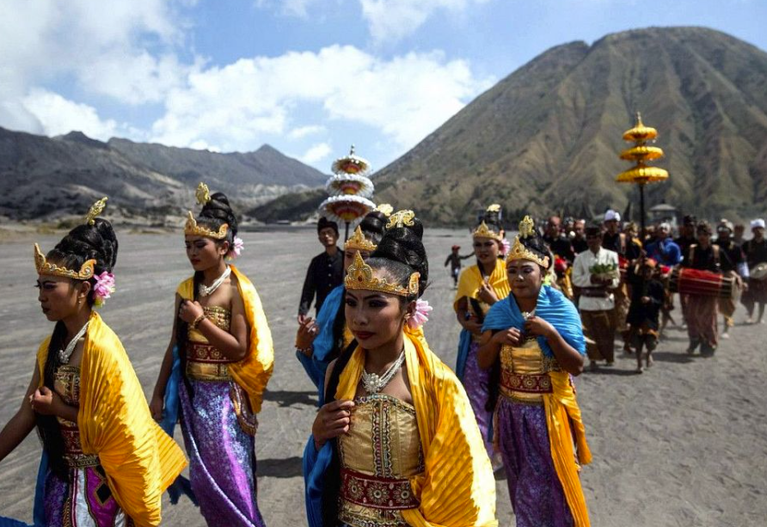
Before Nyepi, many Balinese communities organize processions featuring large figures called Ogoh-Ogoh.
These artistic creations commonly represent frightening beings or negative influences.
The processions form part of the broader ritual preparations surrounding Nyepi, although practices vary between communities.
For tourists, the contrast between the lively activities before Nyepi and the silence of the following day creates a memorable cultural experience.
Travelers should confirm Nyepi dates before booking transportation because the holiday follows a calendar that changes relative to Gregorian dates.
7. Learn About Traditional Indonesian Wedding Ceremonies
Wedding traditions across Indonesia reflect the country’s wide range of ethnic communities and religious beliefs.
Traditional ceremonies often involve extended families, symbolic clothing, ceremonial gifts, and rituals expressing respect for parents and ancestors.
Javanese Wedding Traditions
Javanese weddings may include several traditional stages before and during the marriage ceremony.
One well-known custom is siraman, a ritual bathing ceremony symbolizing purification and preparation for marriage.
Another tradition is sungkeman, during which the couple respectfully seeks blessings from their parents or elders.
Traditional Javanese wedding clothing may include batik fabrics, intricate accessories, and carefully arranged hairstyles.
Minangkabau Wedding Customs
The Minangkabau people of West Sumatra have distinctive customs shaped by their matrilineal social traditions.
Traditional wedding celebrations may feature elaborate clothing, family ceremonies, regional foods, and decorated ceremonial spaces.
The bride’s clothing can include the striking suntiang, an ornate headdress associated with Minangkabau bridal traditions.
Balinese Wedding Ceremonies
Balinese Hindu weddings involve religious rituals, offerings, prayers, and symbolic ceremonies.
The details vary between families and communities.
For visitors, witnessing a wedding can provide valuable cultural insight, but attendance should always be based on a personal invitation or an appropriate arrangement with the hosts.
8. Explore Traditional Markets and Local Food Customs
Food is an essential part of Indonesian cultural traditions.
Traditional markets, street-food stalls, and family dining customs reveal how regional ingredients and cooking methods have developed over generations.
Indonesia’s diverse geography has produced a wide variety of culinary traditions.
Traditional Indonesian Dining Customs
In many Indonesian communities, sharing meals is an important social activity.
Rice is a staple food across much of the country, often served with vegetables, meat, fish, sambal, and regional side dishes.
Some traditional dining settings involve eating with the right hand, particularly when enjoying rice-based meals.
Visitors should wash their hands carefully and follow the customs of their hosts.
Indonesian Foods With Cultural Significance
Rendang: A richly spiced dish strongly associated with Minangkabau cuisine in West Sumatra.
Gudeg: A traditional Yogyakarta specialty made from young jackfruit cooked with coconut milk and spices.
Nasi Tumpeng: A cone-shaped rice dish often presented during celebrations and communal gatherings.
Satay: Skewered grilled meat served with sauces that vary across Indonesian regions.
Nasi Liwet: A rice preparation associated with several regional culinary traditions, particularly in Java.
Trying traditional food in local restaurants and markets can help visitors understand the relationship between Indonesian cuisine, regional identity, and community celebrations.
9. Discover the Toraja Funeral Traditions of Sulawesi
The Toraja people of South Sulawesi are known for distinctive cultural traditions associated with honoring deceased family members.
One important ceremonial tradition is Rambu Solo’, a funeral ceremony that may involve elaborate gatherings, traditional music, ritual activities, and extended family participation.
The Cultural Meaning of Rambu Solo’
In Toraja society, funeral ceremonies can be significant community occasions.
Depending on family circumstances and local traditions, preparations may take considerable time.
The ceremonies reflect deep relationships between family responsibilities, ancestral beliefs, and social identity.
Traditional Toraja houses, known as tongkonan, are also important cultural symbols and are recognized by their distinctive curved roofs.
Responsible Cultural Tourism in Toraja
Travelers visiting Toraja should understand that funeral ceremonies are deeply personal family events.
Participation or observation should only take place with appropriate permission.
Visitors should follow guidance about photography, clothing, gifts, and respectful behavior.
Treating these ceremonies as important family and spiritual occasions rather than entertainment helps protect the dignity of local communities.
10. Experience Traditional Indonesian Martial Arts: Pencak Silat
Pencak Silat is a traditional martial arts practice found in several parts of Indonesia.
It combines physical techniques, disciplined movements, self-defense skills, and cultural values.
Styles differ across regions and may emphasize different forms of movement, performance, and philosophical teaching.
Cultural Values Behind Pencak Silat
Beyond physical techniques, Pencak Silat often emphasizes respect, patience, discipline, and personal responsibility.
Traditional training can also include musical accompaniment and ceremonial elements.
UNESCO recognized the traditions of Pencak Silat as Intangible Cultural Heritage of Humanity in 2019.
Where to Experience Pencak Silat
Visitors may find demonstrations or introductory training opportunities in cultural centers and martial arts schools in Java, Sumatra, and other regions.
Watching a performance or attending a supervised beginner session can provide insight into this traditional art.
11. Discover Indonesia’s Traditional Handicrafts
Traditional handicrafts are an important part of Indonesia’s cultural identity.
Artisans use locally available materials and techniques that have often been passed down through families for generations.
Indonesian Woodcarving
Woodcarving is particularly associated with regions such as Bali and Jepara in Central Java.
Traditional craftsmen create decorative panels, furniture, statues, and architectural ornaments.
The designs may reflect religious symbolism, natural forms, or local artistic traditions.
Traditional Weaving and Ikat Textiles
Ikat is a textile-making technique in which threads are tied and dyed before weaving.
Different Indonesian regions produce distinctive ikat patterns using locally developed methods.
Flores, Sumba, and other parts of eastern Indonesia are especially known for their weaving traditions.
Visitors can explore artisan villages, observe weaving demonstrations, and purchase handmade textiles directly from producers.
Silver and Jewelry Craftsmanship
Kotagede in Yogyakarta is known for its traditional silver craftsmanship.
Local workshops produce jewelry, decorative objects, and intricate metalwork.
Some workshops allow visitors to observe artisans or learn basic jewelry-making techniques.
Supporting genuine local craftspeople helps preserve traditional skills and contributes to community livelihoods.
12. Understand the Tradition of Gotong Royong
One of the most meaningful cultural values in Indonesia is gotong royong, which refers to mutual cooperation and collective assistance.
This principle encourages community members to work together for shared benefits.
It is not limited to formal ceremonies or special celebrations.
How Gotong Royong Works
In many communities, residents cooperate to maintain public spaces, prepare celebrations, organize religious events, and assist neighbors.
The tradition highlights the importance of collective responsibility and social connections.
Travelers may notice local communities working together during village preparations or cultural activities.
Although visitors should not assume they can join every activity, learning about gotong royong helps explain the strong community relationships found across Indonesia.
13. Experience Traditional Indonesian Clothing
Traditional Indonesian clothing reflects regional history, religious influences, artistic techniques, and social identity.
Different communities have developed distinctive garments for everyday life, celebrations, and ceremonial occasions.
Kebaya
The kebaya is a traditional blouse or upper garment worn in various Indonesian communities.
It is often paired with a batik or other traditional textile and may be worn during weddings, national celebrations, and formal cultural events.
Styles differ according to region and occasion.
Sarong
The sarong is a versatile garment worn in many parts of Indonesia.
It may be used for daily activities, religious observances, or traditional ceremonies.
Ulos
Ulos is a traditional woven cloth associated with Batak communities in North Sumatra.
It can carry important symbolic meanings and is often used in significant family and cultural ceremonies.
Visitors interested in traditional clothing can learn about these garments in cultural museums, textile workshops, and local craft markets.
14. Learn Traditional Indonesian Greetings and Etiquette
Understanding local manners is one of the simplest ways to show respect while traveling in Indonesia.
Although customs vary between communities, polite behavior and consideration for others are widely valued.
Common Indonesian Greetings
Learning a few expressions in Bahasa Indonesia can make interactions more welcoming.
- Selamat pagi: Good morning.
- Selamat siang: Good afternoon, around midday.
- Selamat sore: Good late afternoon.
- Terima kasih: Thank you.
- Permisi: Excuse me.
- Tolong: Please, when requesting help.
- Sama-sama: You’re welcome.
Respectful Behavior When Visiting Indonesia
Travelers should dress modestly when entering religious sites and certain traditional communities.
Removing shoes before entering some homes and sacred buildings is also customary.
When meeting elders or participating in community events, polite greetings and respectful behavior are appreciated.
It is advisable to ask permission before photographing individuals, private ceremonies, or religious activities.
Learning basic etiquette helps visitors build positive connections with local communities.
15. Explore Traditional Villages Across Indonesia
Traditional villages provide opportunities to understand how cultural customs are preserved in everyday life.
Many villages maintain distinctive architecture, artistic practices, community structures, and ceremonial traditions.
Penglipuran Village in Bali
Penglipuran is known for its traditional Balinese architecture, organized village layout, and community efforts to preserve local customs.
Visitors can explore designated areas while learning about village traditions and cultural values.
Wae Rebo Village in Flores
Wae Rebo is a mountain village recognized for its distinctive conical traditional houses, called Mbaru Niang.
The village offers insight into Manggarai cultural heritage and traditional community life.
Visiting requires advance planning and respect for the community’s visitor procedures.
Traditional Villages in Sumba
Sumba contains communities known for traditional houses, weaving practices, and ancestral cultural traditions.
Some villages preserve striking architecture with tall roofs and ceremonial spaces.
When exploring these areas, travelers should consider using knowledgeable local guides who can explain customs and facilitate respectful visits.
Best Places to Experience Indonesian Cultural Traditions
Different regions provide distinct cultural experiences, making it worthwhile to explore more than one destination.
| Destination | Cultural experiences |
|---|---|
| Bali | Traditional dance, Hindu ceremonies, temple festivals |
| Yogyakarta | Batik workshops, Wayang Kulit, gamelan music |
| Surakarta (Solo) | Javanese court traditions, batik, gamelan |
| West Sumatra | Minangkabau architecture, cuisine, cultural customs |
| South Sulawesi | Toraja architecture and ceremonial traditions |
| Sumba | Traditional weaving, village customs, Pasola |
| Flores | Manggarai architecture and traditional villages |
| North Sumatra | Batak textiles, music, and cultural heritage |
Each destination offers opportunities to learn how Indonesia’s history and cultural traditions differ from one region to another.
Practical Tips for Experiencing Indonesian Culture Respectfully
Cultural tourism becomes more meaningful when visitors approach traditions with curiosity, patience, and respect.
Research Local Customs Before Traveling
Indonesia is culturally diverse, and acceptable behavior can differ between communities.
Understanding the customs of a particular region helps avoid accidental disrespect.
Support Local Cultural Businesses
Choosing locally operated workshops, traditional performances, and community-led tours contributes to the preservation of cultural heritage.
Purchasing authentic handmade products also supports traditional artisans.
Respect Religious Ceremonies
Religious celebrations are not simply tourist attractions.
Visitors should follow local instructions, avoid interrupting prayers, and respect restricted areas.
Ask Permission Before Taking Photographs
Photography may be inappropriate during certain ceremonies or in private community spaces.
Always obtain permission when photographing people, especially during sensitive events.
Choose Responsible Cultural Experiences
Look for activities that fairly compensate local participants and present cultural traditions accurately.
Avoid experiences that exploit communities or pressure individuals to perform sacred rituals purely for entertainment.
Frequently Asked Questions About Indonesian Cultural Traditions
What Are the Most Popular Cultural Traditions in Indonesia?
Some of Indonesia’s best-known cultural traditions include batik making, gamelan music, Wayang Kulit shadow puppetry, Balinese dance, Pencak Silat, and regional religious festivals. These traditions represent different aspects of the country’s artistic and social heritage.
Where Can Tourists Experience Authentic Indonesian Culture?
Yogyakarta, Surakarta, Bali, West Sumatra, Toraja, Sumba, and Flores are excellent destinations for cultural exploration. Visitors can attend appropriate public performances, explore traditional villages, and participate in locally organized workshops.
What Is the Best Time to Visit Indonesia for Cultural Festivals?
Cultural events take place throughout the year, but their dates depend on regional and religious calendars. Travelers should research the specific festivals they want to attend before booking their trips.
Are Visitors Allowed to Participate in Indonesian Traditional Ceremonies?
Visitors may participate in certain cultural activities and public celebrations when organizers permit it. However, religious rituals, private family ceremonies, and sacred traditions may have restrictions. Permission and respectful conduct are essential.
Why Is Batik Important to Indonesian Culture?
Batik represents traditional craftsmanship, artistic expression, and cultural identity. Its patterns can carry historical and symbolic meanings, and the craft remains important in Indonesian clothing, celebrations, and everyday life.
How Can Travelers Respect Indonesian Culture?
Travelers can show respect by learning basic Indonesian phrases, dressing appropriately, following local customs, supporting local artisans, asking permission before taking photographs, and respecting religious ceremonies.
Conclusion
Experiencing Indonesian cultural traditions is one of the most rewarding ways to understand the country’s unique identity. Beyond its beautiful islands, tropical landscapes, and famous attractions, Indonesia offers a rich cultural world shaped by ancient customs, artistic creativity, spiritual practices, and strong community relationships.
From learning traditional batik techniques in Yogyakarta to watching Balinese dances, exploring villages in Flores, and discovering the music of gamelan, every cultural experience reveals another side of Indonesia’s heritage.
The most meaningful travel experiences often come from respectful conversations, local encounters, and a willingness to learn about traditions that continue to shape everyday life.
For travelers planning their next cultural adventure, discoverindonesianow encourages exploring Indonesia beyond its famous destinations and appreciating the people, history, and living traditions that make the archipelago extraordinary.
One Comment