Indonesian Traditional Ceremonies Meaning & Philosophy
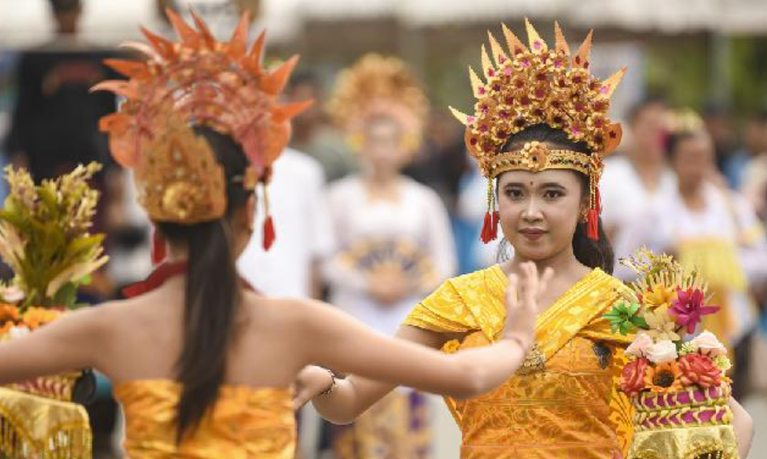
Indonesia is a country of remarkable cultural diversity, where traditional ceremonies remain an essential part of everyday life. With thousands of islands and hundreds of ethnic communities, the nation has developed a rich collection of rituals that reflect its history, spiritual beliefs, social values, and relationship with nature.
Indonesian traditional ceremonies are much more than colorful celebrations or cultural performances. They represent deeply rooted philosophies about human existence, respect for ancestors, community cooperation, spiritual harmony, and the natural environment. Many of these traditions have been preserved for generations, connecting modern Indonesian society with its ancestral heritage.
Understanding the meaning and philosophy behind Indonesian traditional ceremonies provides an opportunity to explore the cultural identity of the country and appreciate the values that continue to shape its communities.
Understanding the Importance of Indonesian Traditional Ceremonies
Traditional ceremonies in Indonesia are commonly associated with adat, a term referring to customary practices, inherited traditions, and community rules. These customs influence important stages of life, including birth, marriage, adulthood, agricultural activities, and death.
Each region has developed distinctive ceremonial practices based on local history, religion, geography, and ancestral beliefs.
Although individual ceremonies differ considerably, many emphasize shared principles such as respect, gratitude, responsibility, cooperation, and harmony.
See also: Indonesian Cultural Traditions Every Visitor Should Experience
The Relationship Between Tradition and Spirituality
Spiritual beliefs play an important role in many Indonesian ceremonies. Some traditions are connected to Hinduism, Buddhism, Islam, Christianity, or indigenous belief systems.
In several communities, ceremonial practices combine religious teachings with older local customs. This cultural interaction has created unique traditions that reflect Indonesia’s long history of spiritual and social development.
For participants, ceremonies may provide opportunities to express gratitude, seek blessings, remember ancestors, or mark important changes in life.
Preserving Cultural Identity Through Rituals
Traditional ceremonies help communities maintain their distinctive identities.
Ceremonial clothing, local languages, traditional music, dances, and symbolic objects all contribute to cultural preservation. Younger generations often learn the meaning of these traditions by participating alongside parents, grandparents, and community elders.
Through this process, ceremonies become living forms of cultural education rather than simply historical customs.
Ngaben Ceremony in Bali: The Philosophy of Life and Death
One of Indonesia’s most recognized traditional ceremonies is Ngaben, a cremation ritual practiced by Balinese Hindus.
Ngaben reflects the belief that physical death is part of a larger spiritual journey. Rather than focusing exclusively on loss, the ceremony emphasizes the relationship between the human body, the soul, and the universe.
Spiritual Meaning of Ngaben
In Balinese Hindu philosophy, the physical body is composed of five fundamental elements, commonly called Panca Maha Bhuta.
These elements are associated with earth, water, fire, air, and space.
During Ngaben, cremation symbolizes the return of the body’s elements to nature. The ceremony is also intended to help release the soul from its physical connection and support its onward spiritual journey.
This belief reflects a broader understanding of existence as a continuing cycle involving creation, preservation, transformation, and dissolution.
Symbolism and Ceremonial Practices
Ngaben ceremonies may involve decorated cremation structures, ritual offerings, prayers, traditional music, and processions.
The specific arrangements vary according to local customs, family circumstances, and religious practices.
Families and community members often cooperate in preparing the ceremony, demonstrating that honoring the deceased is both a spiritual responsibility and a collective undertaking.
The Philosophy Behind Ngaben
The deeper meaning of Ngaben involves acceptance of impermanence, respect for ancestors, and devotion to family.
It teaches that physical existence is temporary while spiritual responsibilities continue beyond an individual’s lifetime.
The ceremony also demonstrates how Balinese Hindu traditions connect the human body with the wider natural universe.
Rambu Solo Ceremony in Toraja: Honoring Ancestors and the Afterlife
In South Sulawesi, the Toraja people are known for their elaborate traditional funeral ceremonies, particularly Rambu Solo.
This ceremony holds great cultural importance and is associated with honoring deceased family members and fulfilling customary responsibilities.
Understanding the Meaning of Rambu Solo
Within the traditional Torajan belief system known as Aluk Todolo, death represents a transition rather than simply the end of existence.
Rambu Solo is traditionally understood as an important ceremony accompanying the deceased toward the realm of the ancestors.
Preparations may involve extended family discussions, ceremonial structures, community gatherings, and traditional performances.
In some communities, funeral arrangements are delayed while families prepare the necessary resources and coordinate customary obligations.
Symbolic Importance of Buffalo
Buffalo hold a significant position in many traditional Torajan funeral ceremonies.
They are associated with status, ceremonial obligation, and traditional beliefs concerning the journey of the deceased.
The number and type of animals involved can vary depending on family circumstances and customary expectations.
These practices must be understood within their specific cultural and historical setting rather than viewed solely as public spectacles.
Community Cooperation and Family Responsibility
Rambu Solo demonstrates the importance of gotong royong, the Indonesian principle of mutual assistance.
Relatives, neighbors, and community members contribute time, labor, and resources toward ceremonial preparations.
This cooperation reflects the belief that individuals remain connected to their families and communities throughout life and after death.
Nyepi in Bali: The Philosophy of Silence and Self-Reflection
Nyepi is the Balinese Hindu Day of Silence, marking the Saka New Year.
Unlike many New Year celebrations that involve public festivities and entertainment, Nyepi emphasizes quietness, spiritual reflection, and restraint.
The Meaning of Nyepi
Nyepi encourages individuals to temporarily withdraw from ordinary activities and focus on spiritual awareness.
Traditional observances include restrictions relating to work, entertainment, travel, and the use of fire or lights.
These practices are associated with Catur Brata Penyepian, the four principal disciplines observed during Nyepi.
The purpose is to create an atmosphere that supports introspection and spiritual renewal.
Philosophy of Inner Balance
The philosophy of Nyepi suggests that personal growth requires moments of stillness.
Daily responsibilities, material desires, and social distractions can make it difficult to reflect on one’s actions and priorities.
By reducing external activity, participants are encouraged to examine their thoughts, behavior, and relationship with the divine.
Connection With Nature
Nyepi also creates a temporary reduction in human activity across Bali.
Although its primary meaning is religious, the observance illustrates how cultural traditions can encourage a quieter relationship with the surrounding environment.
It offers a distinctive example of how spiritual discipline and appreciation for nature can exist together.
Melasti Ceremony: Purification and Spiritual Renewal
Melasti is another important Balinese Hindu ceremony, usually conducted before Nyepi.
It is a purification ritual involving prayers and sacred objects, commonly held near the sea, lakes, or other bodies of water.
Religious Meaning of Melasti
During Melasti, participants may carry sacred temple objects in organized processions toward locations considered spiritually significant.
The ritual represents purification and preparation for the approaching holy day.
Water plays a central symbolic role because it is associated with cleansing, renewal, and sacredness.
The Philosophy of Purification
Melasti emphasizes the importance of maintaining spiritual balance.
Its underlying philosophy encourages people to examine negative influences, renew devotion, and prepare themselves for a more harmonious way of living.
The ceremony also reflects the close relationship between Balinese religious practices and the natural environment.
Sekaten in Java: Religious Heritage and Cultural Continuity
Sekaten is a traditional Javanese celebration associated with the commemoration of the birth of the Prophet Muhammad.
It is particularly connected with the royal cultural traditions of Yogyakarta and Surakarta.
Historical and Cultural Background
Sekaten developed within the historical relationship between Islam and Javanese court culture.
Traditional gamelan performances and gatherings form part of its cultural identity.
The celebration illustrates how religious observances can become deeply connected with local artistic traditions and community history.
Philosophy of Cultural Adaptation
One of the most meaningful aspects of Sekaten is its demonstration of cultural continuity and adaptation.
As religious ideas spread through the Indonesian archipelago, they interacted with established languages, musical traditions, and social customs.
Sekaten reflects this historical interaction and shows how communities can preserve distinctive cultural expressions within their religious lives.
Seren Taun Ceremony: Gratitude for the Harvest
Seren Taun is a traditional harvest-related ceremony associated with certain Sundanese communities in West Java.
It celebrates agricultural life and expresses gratitude for the rice harvest.
Meaning of the Harvest Celebration
Rice has long held a central place in the economy, food culture, and symbolic traditions of Indonesian agricultural communities.
Seren Taun involves ceremonial activities that recognize the importance of agricultural production and community well-being.
Depending on local tradition, activities may include processions, symbolic presentations of rice, music, and communal gatherings.
Philosophy of Gratitude and Sustainability
The ceremony reflects an understanding that agricultural life depends on cooperation between people and their environment.
Farmers rely on seasonal patterns, fertile land, water resources, and shared labor.
By expressing gratitude for the harvest, communities acknowledge their dependence on nature and the importance of preserving agricultural knowledge.
Seren Taun also creates opportunities for younger generations to learn about traditional farming practices and cultural responsibilities.
Yadnya Kasada Ceremony: Sacred Offerings at Mount Bromo
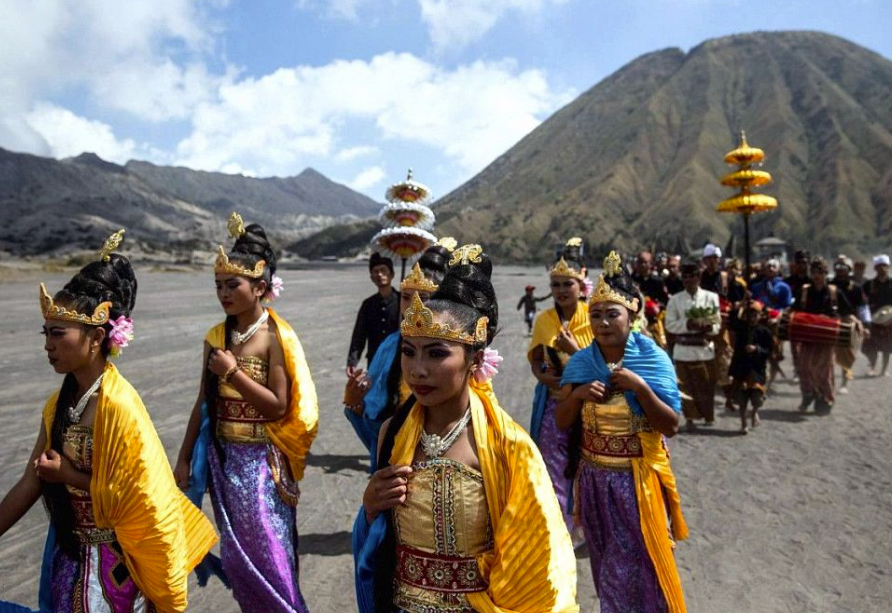
Yadnya Kasada is a religious ceremony observed by the Tenggerese Hindu community around Mount Bromo in East Java.
It is particularly associated with offerings made at the volcanic crater during the Kasada observance.
The Meaning of Yadnya Kasada
The ceremony is connected with Tenggerese traditions and stories surrounding Roro Anteng and Joko Seger, legendary figures associated with the origins of the Tengger community.
Participants bring offerings that may include agricultural produce and other customary items.
The ceremony expresses devotion, gratitude, and respect for sacred obligations.
Relationship Between Nature and Spirituality
Mount Bromo occupies an important place in Tenggerese cultural and religious identity.
The volcanic landscape is not understood merely as a geographical feature but also as part of a sacred environment.
Yadnya Kasada reflects a worldview in which natural places can carry spiritual significance.
Its philosophy emphasizes gratitude, obligation, and maintaining a meaningful relationship with the surrounding landscape.
Traditional Wedding Ceremonies in Indonesia
Marriage ceremonies provide another important example of Indonesian cultural diversity.
Wedding customs differ considerably between ethnic groups, but many involve symbolic rituals that recognize the joining of families and the responsibilities of married life.
Javanese Wedding Traditions
Traditional Javanese weddings may include ceremonies such as Siraman, Midodareni, and Panggih.
Siraman involves a ritual bathing process associated with purification and preparation for marriage.
Midodareni is traditionally held before the wedding and involves family gatherings and preparations.
Panggih refers to the ceremonial meeting of the bride and groom within the Javanese wedding tradition.
These activities carry symbolic meanings connected with respect, harmony, family blessings, and marital responsibility.
Minangkabau Marriage Traditions
The Minangkabau people of West Sumatra have distinctive marriage customs influenced by their matrilineal social organization.
Traditional ceremonies emphasize relationships between extended families, customary obligations, and social identity.
Specific practices vary between communities, but the involvement of relatives and customary representatives often plays an important role.
Philosophy of Marriage Ceremonies
Across many Indonesian communities, marriage is understood as more than a personal relationship between two individuals.
It also creates connections between families and establishes new responsibilities within society.
Traditional wedding ceremonies communicate expectations concerning mutual respect, cooperation, commitment, and family continuity.
Traditional Birth Ceremonies and the Beginning of Life
Birth-related ceremonies form an important part of Indonesian cultural heritage.
These rituals commonly express gratitude for a child’s arrival and introduce the newborn into the social and spiritual life of the family.
Tedak Siten in Javanese Culture
Tedak Siten is a Javanese tradition associated with a child’s first formal steps onto the ground.
The ceremony is commonly performed when a child reaches a particular stage of early development, according to traditional Javanese age calculations.
Symbolic activities may include stepping on colored rice cakes, walking across prepared surfaces, and selecting objects representing different possibilities in life.
Symbolic Meaning of Tedak Siten
The ceremony expresses hopes that the child will grow into a capable, responsible, and successful individual.
Different objects and actions carry meanings related to life’s opportunities, challenges, and responsibilities.
Family participation also reinforces the idea that raising children is supported by relationships extending beyond parents alone.
The Role of Traditional Music and Dance in Indonesian Ceremonies
Music and dance are essential components of many Indonesian ceremonial traditions.
They may serve spiritual, social, educational, or artistic purposes depending on the region and ceremony.
Gamelan Music and Ceremonial Atmosphere
Gamelan ensembles are particularly associated with Java and Bali, although their forms and musical traditions differ.
In certain ceremonies, gamelan music accompanies processions, dances, or ritual activities.
Musical patterns can help organize ceremonial movements and establish an appropriate atmosphere.
Traditional Dance as Cultural Communication
Traditional dances often communicate narratives about history, spirituality, social relationships, or local identity.
Movements, gestures, costumes, and musical accompaniment may have established symbolic meanings.
In ceremonial contexts, dance can function as an expression of devotion, a welcoming practice, or a way of preserving cultural knowledge.
Common Philosophical Values Behind Indonesian Traditional Ceremonies
Despite their differences, Indonesian traditional ceremonies frequently express several broad cultural principles.
Harmony Between Humans and Nature
Many agricultural, spiritual, and community traditions emphasize the relationship between people and the natural world.
In Balinese Hindu thought, the philosophy of Tri Hita Karana highlights harmonious relationships among humans, the divine, and the environment.
Other Indonesian communities express comparable concerns through their own distinctive belief systems and customary practices.
These perspectives encourage awareness of the environment and recognition of humanity’s dependence on natural resources.
Respect for Ancestors and Previous Generations
Respect for ancestors is especially visible in funeral rituals and ceremonies connected with family heritage.
Traditional practices recognize that individuals inherit languages, customs, knowledge, and responsibilities from earlier generations.
Remembering ancestors helps strengthen a community’s sense of historical continuity.
Gotong Royong and Social Cooperation
Gotong royong remains one of the most recognizable principles of Indonesian social life.
The concept refers to mutual assistance and collective participation in activities that benefit families or communities.
Traditional ceremonies often require people to prepare food, decorate ceremonial spaces, organize gatherings, and support participants.
These shared responsibilities strengthen social relationships and encourage cooperation.
Gratitude and Humility
Numerous ceremonies involve giving thanks for important events, including successful harvests, births, marriages, and spiritual milestones.
Expressions of gratitude acknowledge that individual achievements often depend on support from family, society, and the environment.
This philosophy encourages humility and appreciation for the circumstances that sustain life.
Balance Between Material and Spiritual Life
Many Indonesian ceremonies encourage participants to consider responsibilities beyond everyday material concerns.
Ritual prayers, symbolic offerings, periods of reflection, and community gatherings create opportunities to focus on values such as patience, generosity, devotion, and compassion.
However, these values are expressed differently across Indonesia’s diverse religious and cultural communities.
How Indonesian Traditional Ceremonies Are Preserved Today
Modernization, urban development, migration, and changes in lifestyle have influenced traditional ceremonial practices throughout Indonesia.
Nevertheless, many communities continue to preserve these customs by adapting them to contemporary circumstances.
Community and Family Participation
Families remain central to the continuation of traditional ceremonies.
Parents and grandparents pass down knowledge about ceremonial clothing, rituals, language, food preparation, and customary responsibilities.
Participation provides younger generations with firsthand experience of their cultural heritage.
Cultural Education and Documentation
Schools, cultural organizations, researchers, and local institutions contribute to preserving traditional practices.
Documentation through photography, written records, oral histories, and digital media can help communities safeguard cultural knowledge.
However, preserving ceremonies also requires maintaining their meaning for the people who practice them.
The Influence of Tourism
Cultural tourism has increased international awareness of Indonesian traditional ceremonies.
Visitors may attend public celebrations, observe traditional performances, and learn about local customs.
Tourism can create economic opportunities and encourage cultural appreciation, but it can also place pressure on communities to present sacred practices as entertainment.
Responsible tourism should prioritize local consent, cultural sensitivity, and respect for religious boundaries.
How Visitors Can Respect Indonesian Traditional Ceremonies
Travelers interested in Indonesian culture should approach traditional ceremonies with curiosity and consideration.
Some events welcome public participation or observation, while others are private religious or family occasions.
Visitors should seek permission before entering ceremonial spaces, photographing participants, or recording rituals.
Appropriate clothing may be required at temples or other sacred locations.
Following local instructions and avoiding interference with ceremonial activities demonstrates respect for the people preserving these traditions.
Travelers can also learn more by speaking with knowledgeable local guides and supporting community-led cultural initiatives.
Through respectful engagement, visitors gain a more meaningful understanding of Indonesian heritage.
Frequently Asked Questions About Indonesian Traditional Ceremonies
What Are Indonesian Traditional Ceremonies?
Indonesian traditional ceremonies are cultural or religious rituals inherited across generations. They mark significant events such as births, marriages, harvests, religious occasions, and deaths while preserving community beliefs and customs.
Why Are Traditional Ceremonies Important in Indonesia?
They preserve cultural identity, strengthen family relationships, communicate spiritual beliefs, and encourage cooperation within communities. They also allow younger generations to understand their cultural heritage.
What Is the Most Famous Traditional Ceremony in Bali?
Ngaben and Nyepi are among the most widely recognized Balinese ceremonies. Ngaben is associated with cremation and the spiritual journey after death, while Nyepi emphasizes silence, self-discipline, and reflection.
What Is the Philosophy Behind Indonesian Funeral Ceremonies?
The philosophy differs between communities. Many traditional funeral ceremonies emphasize honoring deceased family members, fulfilling ancestral responsibilities, and recognizing the relationship between physical death and spiritual beliefs.
How Are Indonesian Ceremonies Connected to Nature?
Many ceremonies involve agricultural cycles, water, mountains, forests, or other natural features. These practices may express gratitude for natural resources, spiritual reverence, and the importance of maintaining environmental balance.
Can Tourists Attend Traditional Ceremonies in Indonesia?
Some traditional ceremonies are open to visitors, while others are restricted to families or religious communities. Tourists should follow local guidance, dress respectfully, and obtain permission before taking photographs or participating.
Conclusion
Indonesian traditional ceremonies reveal the extraordinary cultural and spiritual diversity of the Indonesian archipelago. From the philosophical teachings of Ngaben and Nyepi in Bali to the ancestral traditions of Rambu Solo in Toraja and the agricultural gratitude expressed through Seren Taun, each ceremony provides insight into the values of its community.
The meaning and philosophy of Indonesian traditional ceremonies extend beyond their visible rituals. They communicate ideas about the cycle of life, family responsibility, spiritual devotion, gratitude, social cooperation, and respect for nature.
As Indonesia continues to develop, preserving these ceremonies remains essential to protecting the country’s cultural identity. By understanding their significance and respecting the communities that practice them, people can develop a deeper appreciation of Indonesia’s living traditions.
For readers exploring Indonesia’s cultural heritage, discoverindonesianow encourages a deeper understanding of the customs, regional identities, and traditional philosophies that make the country one of the world’s most culturally diverse destinations.